A First Stadium Visit: What to Notice Before Taking Your Seat
A first stadium visit feels easier when you know what to notice from the approach to the stand, including signs, thresholds, concourses and seating routes.
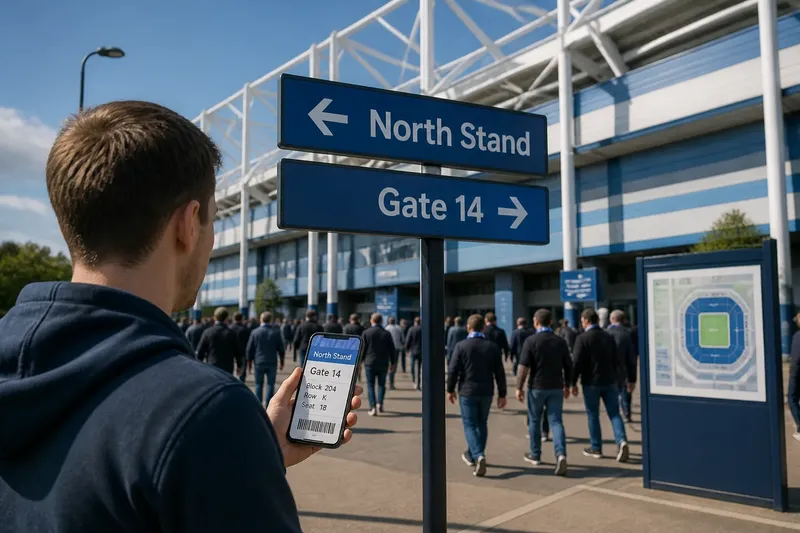
You reach the stadium with your ticket open on your phone, but the entrance in front of you is not the one printed on it. On a first stadium visit, that small mismatch is a useful cue: the building is already directing people before they reach the seats. Notice how it does so, and the route from the street to your place becomes easier to read.
This is not a race to collect architectural details. Take the ordinary route at an unhurried pace, keeping your ticket and any mobility or entry instructions to hand. The approach, gate, concourse and stand each make a different kind of transition. Watching for those changes can help you feel oriented and understand how the venue handles a crowd.
What should I notice as I approach the stadium?
Look for the point where the stadium begins to shape your route. A venue may appear as a single large structure from afar, yet the final approach often passes through open plazas, perimeter paths, temporary barriers or adjoining streets. These spaces spread arriving visitors out and guide them towards particular entrances.
Check how the signs relate to what you can see. A prominent sign might name a gate, while smaller boards point towards entrances by stand, ticket zone or accessible route. Follow the directions on your ticket rather than choosing a gate because it looks closer. At some venues, gates are assigned to distribute visitors around the perimeter, not simply to send each person to the nearest door.
Notice what helps you keep your bearings. The roof edge, a distinctive corner, a tower, a large entrance sign or a visible transport stop can serve as a landmark. You may be able to see some of these from the approach and others only after entering. Making a mental note of one clear landmark is more useful than trying to memorise every sign.
The ground underfoot also gives clues. Changes in paving, railings and queue lanes can separate people arriving on foot from those waiting for screening or meeting companions. If the route divides, pause somewhere clear of moving visitors and read the signs before choosing. It is not worth stopping in a narrow doorway to compare every feature of the façade; keep the flow moving, then look around where there is room.
How can I tell which entrance is meant for my ticket?
Match the gate information on your ticket to the entrance signs, and ask an event steward if the two do not seem to agree. A ticket may identify a gate, stand, block or entry zone, and those labels do not always describe the same thing. Confirming the route before joining a queue can prevent an unnecessary walk around the perimeter.
At the entrance, notice how the queue is arranged and where the ticket check begins. Barriers may divide lines by ticket type, accessibility needs or entry lane. Staff can direct you if your ticket display is unclear; avoid inferring that a shorter queue is the correct one just because it appears to move faster.
Look at the threshold itself without holding up the line. The gate may lead first to a covered passage, a security check or a wider internal plaza rather than directly to the concourse. That sequence changes how quickly the view opens up and where visitors pause to check their route.
For entry arrangements, permitted items and accessible access, follow the current ticket information, venue instructions and staff directions. These details can differ between venues and events.
What changes when I cross from the entrance to the concourse?
The concourse is the circulation space that connects entrances, facilities and routes to the seating areas. As you enter it, listen for the change in sound and watch how the space opens or narrows. A low passage may lead into a bright, broad corridor; a direct entrance may bring you into a busy junction where several routes meet.
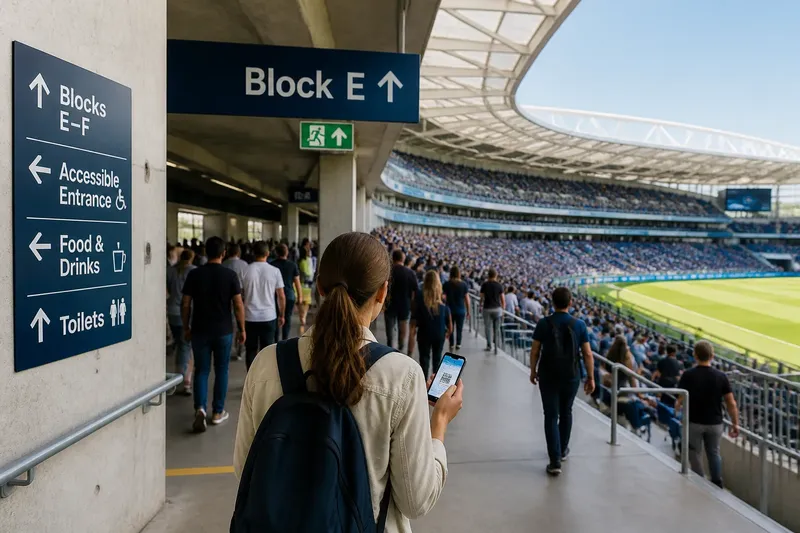
Before setting off, find the nearest sign for your stand or seating block. Then notice where the sign is placed: overhead boards can be easy to miss beneath a deep roof, while wall signs may be clearer when the corridor is busy. If the route forks, check the next sign rather than relying on a remembered direction from the entrance.
Facilities and food counters tend to sit along or beside these circulation routes. They can make a concourse feel like a place to linger, but a queue may also narrow the space people need to pass. If you want to pause, choose a spot away from a junction, stair landing or doorway. This small courtesy makes the route easier for visitors who are still trying to find their block.
Imagine you enter behind a group that turns towards a food counter, while your ticket points to a stand on the opposite side. Step to the wall where you are not obstructing anyone, check the overhead board and follow the marked route towards your block. The expected result is a calmer, more direct decision than following the crowd and correcting course later.
How do I follow the route from the concourse to my seat?
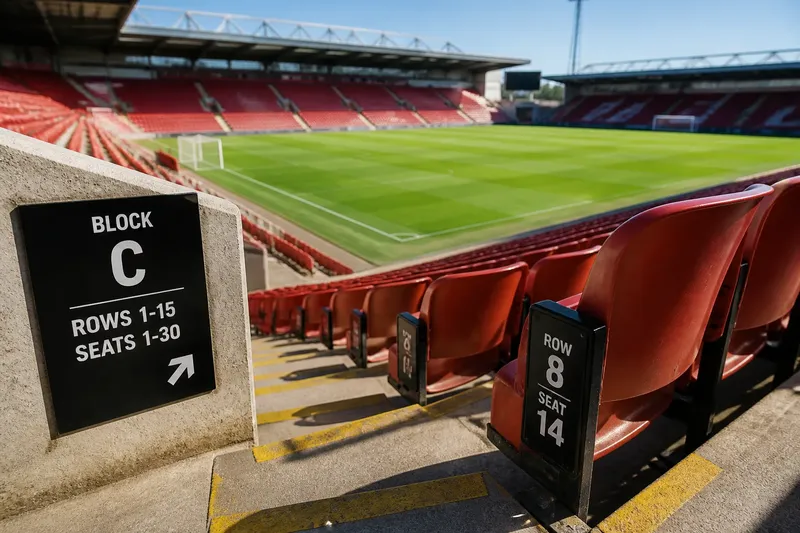
Use the stand, block and row information on your ticket as separate pieces of the route. Signs on the concourse usually help you reach the stand or block; a section marker or steward can then help you identify the correct seating entrance. Once inside the stand, row labels and seat numbers finish the search.
Watch how the building changes level. A ramp, stairway, lift lobby or vomitory—the passage that leads through the seating structure—may connect the concourse to a particular part of the stand. These routes are not interchangeable. If you need a step-free route or another form of assistance, follow the venue’s designated directions and ask staff rather than trying to adapt a stair route.
At the mouth of a passage, the field or court may appear all at once, or only as a narrow glimpse between walls. That opening is a transition from shared circulation space to the more focused space of the stand. Take care not to stop in the doorway while looking. Move into a clear area beside the entrance before checking your ticket or taking in the view.
Once you reach a seating row, pause at its entrance and read the row marker before moving along it. People already seated may need to make room, and a bag or coat can catch on the narrow gap between seats. Keeping your ticket ready and following the row labels helps you reach your place without a long search in front of other visitors.
Which details help me feel oriented once I am inside?
Choose a few visible reference points rather than trying to memorise the whole building. A nearby stair entrance, a numbered section sign or a distinctive concourse feature can help you recognise the route back. If the stand looks similar all around, use the labels and your ticket instead of assuming that every corner has a unique appearance.
Notice the boundary between the public concourse and the seating area. Changes in floor finish, lighting, ceiling height and sound can mark that boundary even when there is no dramatic doorway. Those shifts are not merely decorative; they help distinguish a place for moving and gathering from one where people settle to watch.
Take a moment to look at what is above and around you, but keep practical needs in view. If you are meeting someone later, agree on a clearly named place shown on venue signs rather than a vague landmark such as “near the entrance.” If you need help, a visible steward or information point is a better reference than an unmarked corner.
What should I do when signs and ticket details are unclear?
First, move to a place where you are not blocking a doorway, queue or crossing route. Compare the gate, stand and block labels on your ticket with the nearest signs. If they still do not match, ask a steward before joining a queue; venue staff can confirm which route applies to your entry.
Should I follow the crowd?
Use the crowd as a clue, not as your only guide. People may be heading to different blocks or facilities, so check the nearest sign against your ticket before turning.
What if I cannot find my block?
Stop in a place that does not obstruct a doorway or crossing route and ask a steward for directions. Give them the stand, block and row details shown on your ticket, as those labels help distinguish similar entrances.
Where should I wait for someone?
Choose a signed meeting point or a broad area away from the main stream of arrivals. Agree on the precise place in advance if you can, since “outside the gate” may mean different sides of a large entrance.
Can I explore before going to my seat?
That depends on the event’s access rules and the spaces open to visitors. Follow signs and staff directions, and keep your route to the seat clear if the concourse is becoming crowded.
How can a first stadium visit feel less rushed?
Give yourself room to read signs, especially at the entrance and at the first junction inside. Keep your ticket accessible, follow one legible route at a time, and ask for help early if the labels do not match what you see. Those simple habits leave more attention for the design details that can otherwise pass unnoticed.
A first stadium visit is easier to understand when you notice each transition: street to perimeter, perimeter to gate, gate to concourse, and concourse to stand. The useful detail is often modest—a sign at a fork, a clear view of a stair entrance, or a landmark you can recognise on the way back. Once you have found your seat, that remembered route can make the stadium feel less like a maze and more like a place you can read.