The Best Seat Is Not Always on the Halfway Line
A clear football view depends on height and angle as well as distance. Compare seats by the runs, team shape and close play you most want to follow.
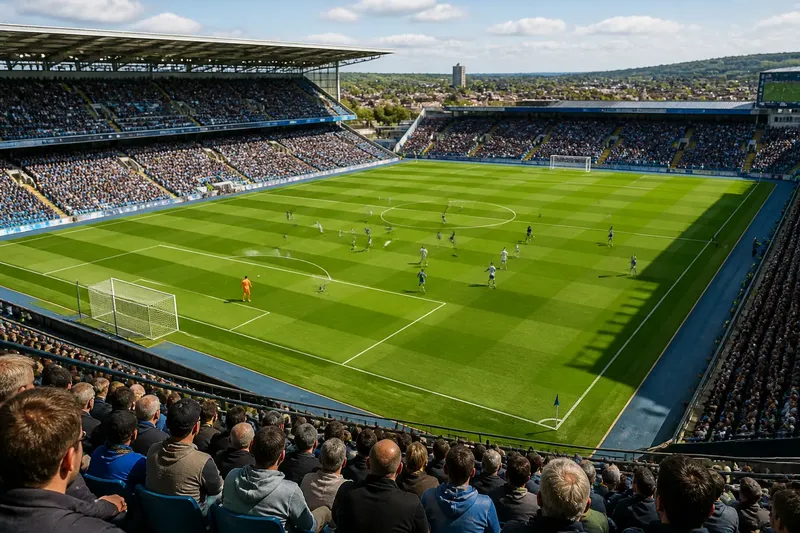
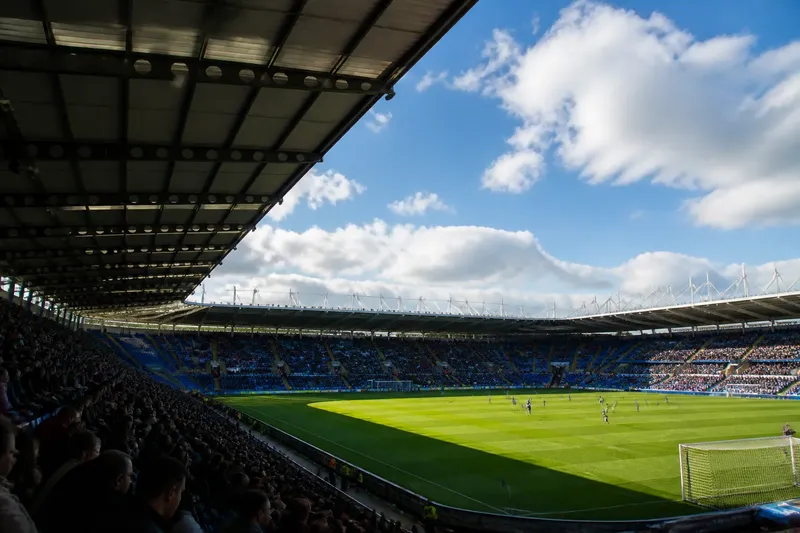
You settle into a seat near the halfway line, look across the pitch and expect the whole match to open up. Yet the far touchline seems distant, players overlap, and a pass into space can be hard to read. A clear football view depends not only on being central, but also on height and angle.
A central seat can make the pitch look flatter
From the middle of a stand, the two goals sit at similar distances and the pitch feels balanced. That symmetry is satisfying, but it can make the field seem like a broad rectangle rather than a space with near and far sides. Players running towards or away from you may appear to change position less than they do from a diagonal view.
This matters when you are trying to understand a developing attack. You may see the ball clearly while finding it harder to judge whether a forward has moved beyond the defensive line. A central sightline gives a good view across the width of the pitch, but can make the depth between the lines less legible.
There is no single best angle for every match or spectator. Some people value a close view of individual touches; others want to read the whole formation. The useful question is what parts of the game a seat makes easiest to follow.
Height separates players who overlap from your viewpoint
A higher seat gives you a steeper view of the playing surface. Gaps between players become easier to distinguish, and you can often follow a defensive line as a group. Off-the-ball runs may be less likely to disappear behind the opponent nearest the ball.
Height also changes how the pitch markings work as visual guides. The halfway line, penalty areas and touchlines form a map beneath the action. From a low seat, bodies or advertising boards can obscure parts of that map; from a higher one, the field’s geometry is easier to take in. The trade-off is that players may seem smaller, and close play can feel less immediate.
Think about the attention you bring to a match. If you like tracking the team’s shape as it shifts, a higher position may suit you. If you prefer to watch a particular player’s control and movement, a lower seat can make those details more vivid, even if the wider pattern is less obvious.
A diagonal view reveals runs through depth
A seat off-centre points your view along the pitch rather than squarely across it. That angle can make a run from midfield towards goal easier to read: the player’s movement has a clearer direction, and the spaces between the lines seem to open up. It can also help you follow the ball as it travels between ends, because its path is less likely to sit directly behind another player in your view.
The angle is not automatically better. From far to one side, the near goal may dominate while the opposite end looks compressed. A steep diagonal can make the far touchline hard to judge, and play may be partly hidden behind the goal structure or other spectators. A useful position is often one that feels angled without turning the far end into a narrow slice.
Say you are choosing between two available seats for a match you mainly want to read tactically. The first is low and close to halfway; the second is higher and a little towards a corner. From the seating map, you note that both keep the goals in view, while a seat-view image for the higher option shows more of the pitch between the players. You choose the second seat because seeing the distance between the forward line and midfield matters more to you than a close sense of individual touches. The trade-off is that players will feel less immediate.
Compare available seats in one sitting
You do not need to spread a straightforward comparison across a week. Set aside the ticket options you can actually buy, then compare their position, height and available view images together. A short list of priorities helps: choose whether you care most about team shape, close skill, the far goal or keeping the whole pitch visible.
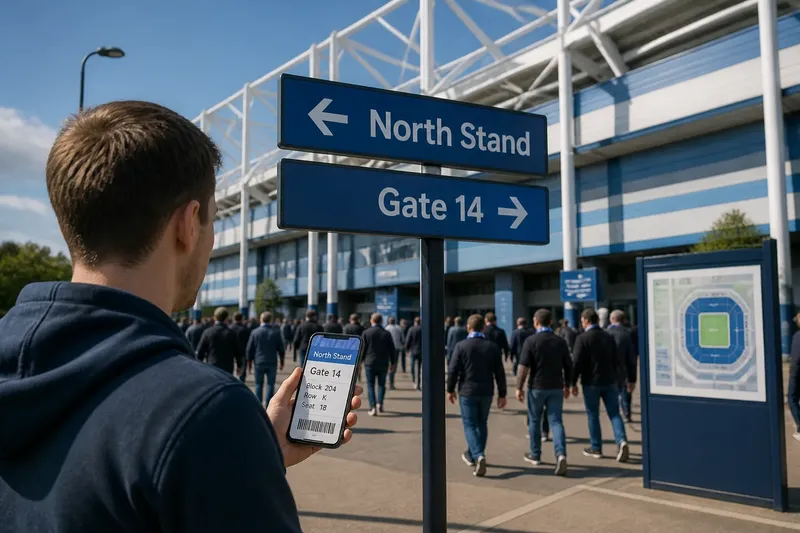
- Check the seating map for each option. If a seat is central, expect a balanced view across the pitch; if it is behind a goal or far to one side, compare another available angle before deciding.
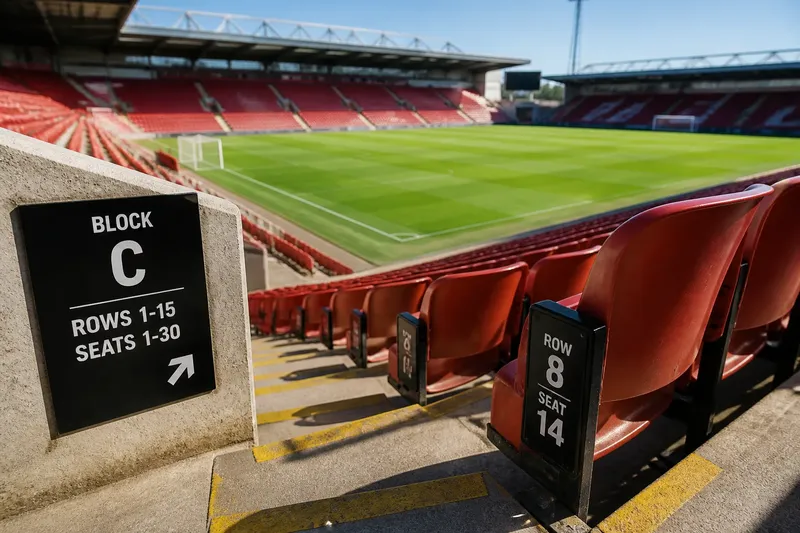
- Check the tier or row information for height. If you want to separate players and read team shape, favour the higher option; if close play matters more, consider the lower seat and accept a less complete view of the formation.
- Check whether a seat-view image is for the exact seat or only the section. If it shows your seat, inspect the far touchline and both goals; if it is a generic image, treat it as a rough guide and look for a more specific view.
- Check the image for visible barriers or roof supports. If one crosses the playing area, compare another seat or ask the venue about the obstruction; if none is apparent, remember the image may not show every condition on match day.
- Check the angle by tracing an imagined switch of play on the map or image. If the view runs along a manageable diagonal, it may suit following movement between ends; if it demands a severe sideways turn, choose a less extreme position.
- Check which part of the match you expect to watch most closely. If you will follow one player’s touches, lean towards a lower position; if you will follow runs and spacing, compare higher seats before choosing.
There is little value in building a complicated scoring system when only a few seats are available. A seating map cannot reveal every obstruction, and a generic illustration is less informative than a view from the exact seat. For seating restrictions or access needs, consult the venue’s own information before booking.
Which seat position suits the way you watch?
Is halfway always the clearest place to watch football?
No. It gives a balanced view across the pitch, but a low central angle can make the space between players harder to judge. A higher or more diagonal seat may make runs and team shape easier to follow.
Are higher seats better for understanding tactics?
They can be, because more of the pitch is visible at once and players are less likely to hide one another. The trade-off is distance: individual touches and physical details may feel less immediate.
Where should I sit to watch the whole pitch?
Look for a position that keeps both ends and the far touchline in view without a severe sideways angle. A higher seat near the centre often suits this aim, though the layout and obstructions of each stadium matter.
Is a seat behind the goal a good choice?
It can make attacks towards that goal feel direct and dramatic, but play at the far end may be harder to read. Choose it if seeing one goal and the approach to it matters more than a balanced view of both halves.
Choose for the movement you want to follow
The halfway line is a useful reference point, not a verdict on seat quality. For a clear football view, think about whether you want to see across the pitch, down its length or over the spaces between players. Height can reveal structure; angle can clarify direction; proximity can bring close play to life.
When choosing, give more weight to the view you will keep returning to during the match than to a seat’s position on a plan. If your attention follows runs into space, a higher diagonal may be more rewarding than a perfectly central row. If you want to feel the match at player level, accept that some tactical detail will be harder to see. The clearest choice is the one that suits the movement you most want to follow.